
Supporting Research
2026
Independent study shows students using MPP digital lessons outperformed their peers in six of seven well-being areas.
Overview
During the 2025–2026 school year, Dr. Tatiana Bailey of Data-Driven Economic Strategies conducted an independent evaluation of MPP's digital classroom lessons with nearly 500 3rd–6th grade students across 7 schools and 5 Pikes Peak region districts. Classrooms were divided into program and control groups, with outcomes measured at the beginning and end of each semester. This research was made possible by the GE Johnson Foundation and the Colorado Springs Health Foundation.
Key Findings
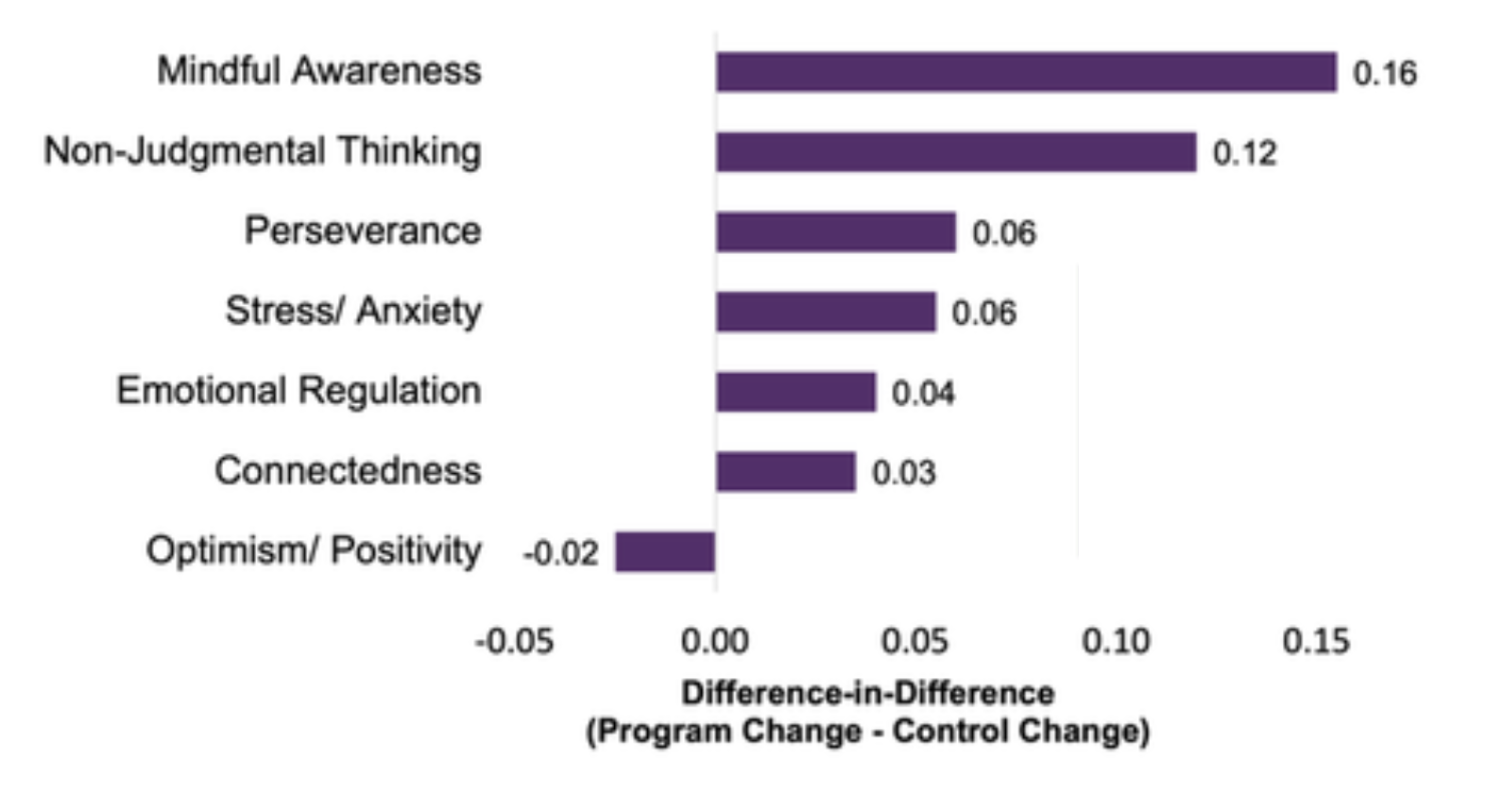
After just one semester, students in MPP classrooms showed greater improvement than comparison students in 6 of 7 well-being areas, with the strongest gains in mindful awareness, self-compassion, perseverance, and stress management.
Students who continued into a second semester showed additional gains in perseverance, connectedness, stress management, and non-judgmental thinking — evidence that these skills strengthen with sustained practice.
Students reported that breathing, journaling, and gratitude activities helped them feel calmer, happier, and better able to manage their thoughts and emotions.
Stronger Student Well-Being
Program students outperformed the control group in 6 of 7 outcome areas after just one semester.
Skills That Grow Overtime
A second semester of lessons brought additional gains in perseverance, connectedness, and stress management.
Teachers Recommend MPP Lessons
90% of teachers would recommend MPP lessons to their peers.
“We are thrilled to serve as the evaluators of this incredible community contribution for our teachers and students. We recognize the need for teaching our next generation how to cope with all aspects of life while garnering gratitude and goodwill for those around us. We also recognize that we must hail the positive outcomes of these kinds of interventions, so they are valued and sustained over time.”
– Dr. Tatiana Bailey, Data-Driven Economic Strategies2023
National Institutes of Health study shows that The MPP significantly supports both educators and students
Overview
A study was conducted with 163 public school teachers, counselors, administrators, and school staff from multiple school districts in the Pikes Peak Region to evaluate the effectiveness and impact of 8-weeks of mindfulness and positive psychology training. Outcomes were measured at baseline, after 8-weeks of training, and at 2-month follow-up.
Key Findings
Training was highly effective in improving the mental and emotional well-being of educators.
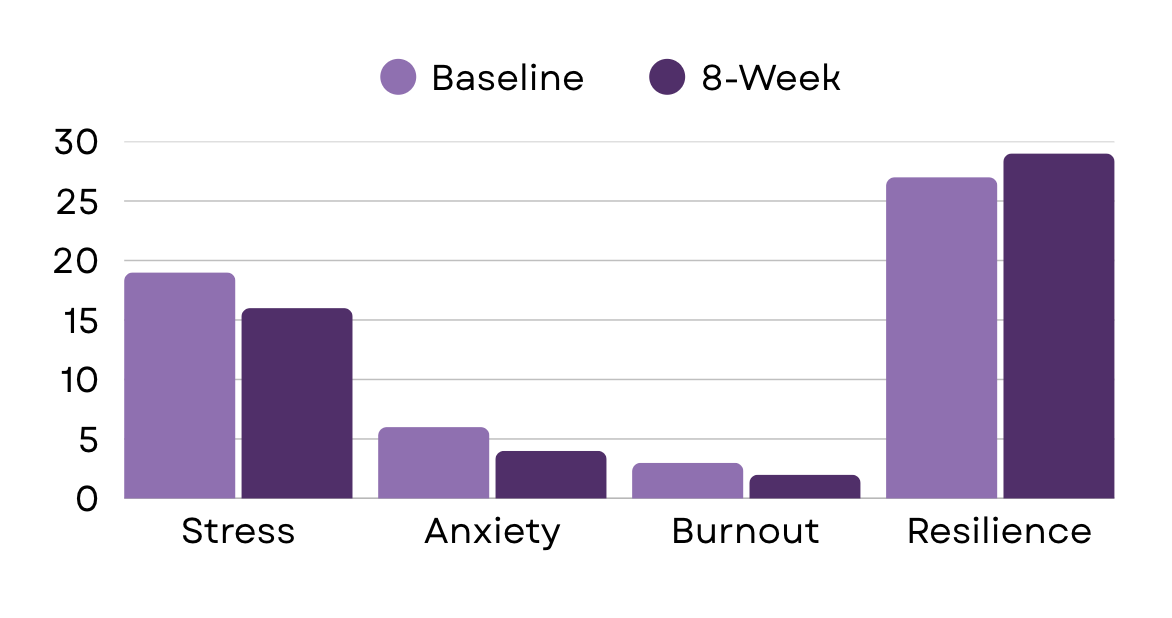
Significant improvements in perceived stress, anxiety, burnout, and resilience after 8-weeks of training, with improvements maintained at 2 month follow-up.
Teachers began regularly using mindfulness tools in their daily lives and incorporating them into their classrooms.
Improved Educator Well-Being
Significantly lower stress, anxiety, and burnout; and increased resilience.
Mindfulness In Practice
133% increased weekly use of mindfulness tools to support well-being.
Positive Impact on Students
75% increased use of mindfulness and positive psychology tools in the classroom.
2019
UCCS study found that students who practiced mindfulness and positivity regularly in class experienced significant growth in coping self-efficacy and stress management.
Overview
Following a 2018 pilot with 250 Cheyenne Mountain High School freshmen, a study led by Dr. Thomas Pyszczynski, distinguished professor of psychology at the University of Colorado Colorado Springs, examined MPP's classroom model at scale. Ten teachers, most with little or no prior mindfulness experience, and 440 students across all grade levels were trained through introductory seminars and MPP workshops; 320 students participated in the study, completing 960 research surveys over three months.
Key Findings
Students who practiced regularly in class showed significant growth in coping self-efficacy — the belief in one's own ability to manage stress and anxiety, which is associated with better overall mental health. The UCCS team identified this as a novel finding in the mindfulness literature.
Students showed significant growth in their ability to observe and describe negative thoughts without reacting to them, and a greater ability to stop and reflect before acting.
Participants reported less sadness and loneliness, improved self-esteem, stronger problem-solving, and greater willingness to seek support when facing challenges.
Explore Our Digital Lessons
Zero-prep video lessons to enhance teacher and student well-being.